


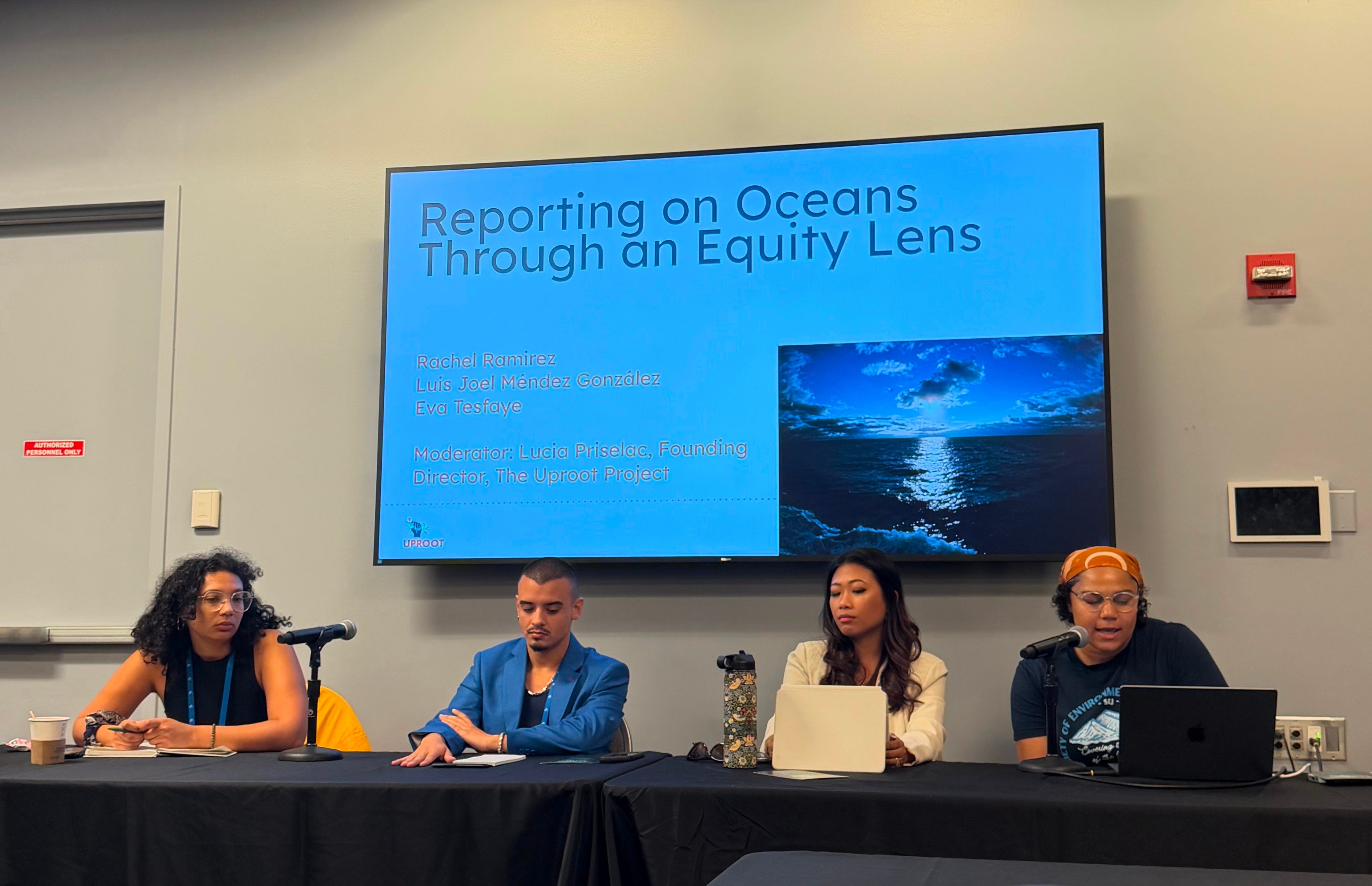
Editor’s Note: You’ll notice a shift in format this week. I’m highlighting a panel I recently participated in because the discussion perfectly captures why I started The Confluence.
Critical stories are emerging from the world’s oceans, yet they barely make a ripple in headlines. From an ongoing marine contamination crisis in the eastern shores of Papua New Guinea to the aftermath of a rare early-season super typhoon that battered the Marianas archipelago, these events highlight the urgent need for more news coverage of the world’s oceans.
The ocean functions as the planet’s primary life-support system, covering over 70 percent of the Earth’s surface and holding 97 percent of its water. But while the ocean serves everyone, its benefits and burdens are not shared equally. For too long, governments and corporations have prioritized industrial extraction, militarization, and global markets over the local communities that have stewarded these waters for generations.
That was the topic I discussed alongside fellow journalists on a panel at the Society for Environmental Journalists conference in Chicago on April 18. The session spotlighted the work of three fellows, including myself, of the Metcalf Ocean Nexus Academy, which provides journalists with financial support to cover stories that highlight ocean equity.
Ocean equity involves ensuring appropriate support and rights for people who have been marginalized by factors such as race, gender, class, or geography, and addressing the structural inequalities that shape their lives, according to the Ocean Nexus website. In this sense, equity is not about treating everyone the same – it is about prioritizing those who have been placed at disadvantage.
For Eva Tesfaye, a MONA fellow and coastal reporter with WWNO, New Orleans Public Radio, reporting on ocean equity looks like reporting on migrant workers at fishing and seafood processing industries beyond the usually suspected countries, and instead, focusing on the United States. During her reporting, she found that when employers are unable to find people domestically willing to do these hands-on jobs, they often turn to foreign workers with less protections.
When covering the oceans, Tesfaye encourages journalists to ask themselves, “What groups of people are underrepresented when it comes to sharing this global resource?”
Luis Joel Méndez González, another MONA fellow and a Puerto Rico-based investigative reporter with Centro de Periodismo Investigativo, said applying ocean equity to his reporting means diving into the tourism industry by examining the strain on basic infrastructure, gentrification, and its connection to the ongoing climate crisis.
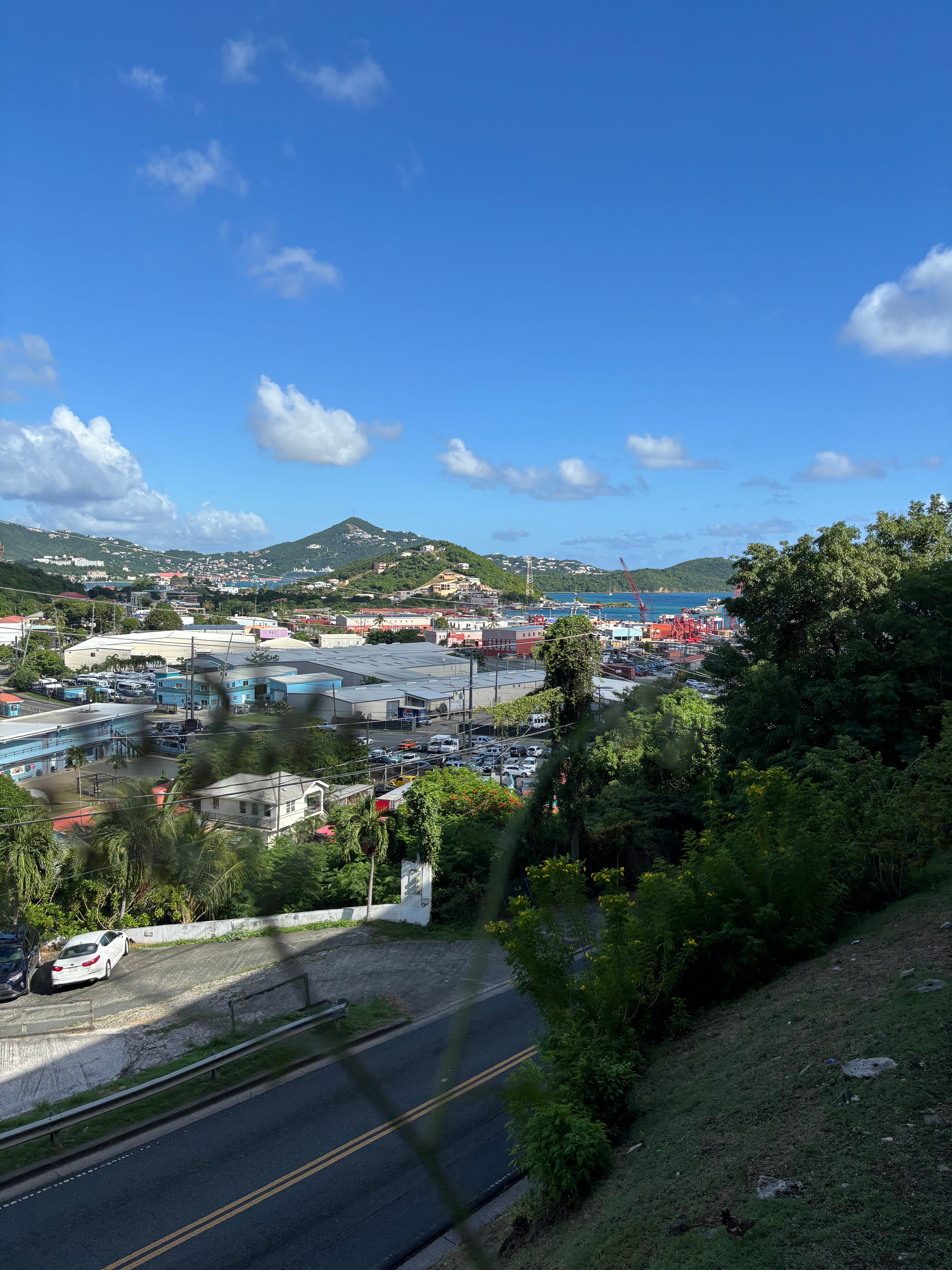
“It is impossible to report from an equitable and fair perspective if we don’t dive into what people on the ground actually think and compare it with data,” Méndez González said, underscoring that governments often leave communities with no choice but to rely on private interests. “Most of the time, despite understanding the harm ocean-related economies can cause to the environment, communities prioritize their economic well-being because they have to survive.”
This tension is nowhere more evident than in the growing race to mine the deep seas, one of the last untouched frontier on Earth. As mining corporations promise jobs and economic autonomy to small-island developing nations in exchange for mining leases, stories of deep-sea mining often skip over the voices of the local communities who will bear the environmental cost.
Deep-sea mining is being sold as a climate necessity, but many experts say it is not needed for the larger “green revolution.” As part of my fellowship, I have been reporting on deep-sea mining for months now. I believe we cannot report on deep-sea extraction without centering the people, particularly Indigenous Pacific Islanders, the industry claims to empower.
Other ways journalists can spot stories of ocean equity include looking at how coastal communities often bear the brunt of pollution, rising sea levels, and climate change-fueled disasters, despite contributing the least to the problem. One can also look at how small-scale fishers frequently lose access to traditional waters to make way for large-scale commercial interests.
The ocean also absorbs roughly 90 percent of the excess heat generated by planet-warming pollution, which places an immense burden on ecosystems. When waters warm, high-value fish species move toward the poles, often avoiding the tropical or subtropical waters where local, small-scale fishers have relied on them for generations. This means large, high-tech trawlers from big fishing companies are able to chase stocks into regions, while the local community or small-scale fishers who are legally or physically tethered to their home waters face the economic burden.
So when the ocean bears the burden of our excess heat, it’s important to pay attention to the most vulnerable communities who pay the price. The ocean is speaking, and here at The Confluence, we are ready to listen. Are you?

SOS Signal
Super Typhoon Sinlaku just pummeled the islands of Chuuk, Guam, and the Commonwealth of the Northern Mariana Islands. The Marianas islands of Tinian and Saipan, where I was born and raised, suffered the most damages as Sinlaku’s eye stalled offshore for hours, grinding the islands beneath its eyewall.
These islands need your help. Here is the full list of resources.
Relief aid for the Marianas. Donate to this GoFundMe.
Relief aid for Chuuk. Donate to this GoFundMe.
Donate directly to the Micronesia Climate Change Alliance and type ‘Sinlaku’
For those stateside, contribute via this Amazon wish list for CNMI and Guam relief.
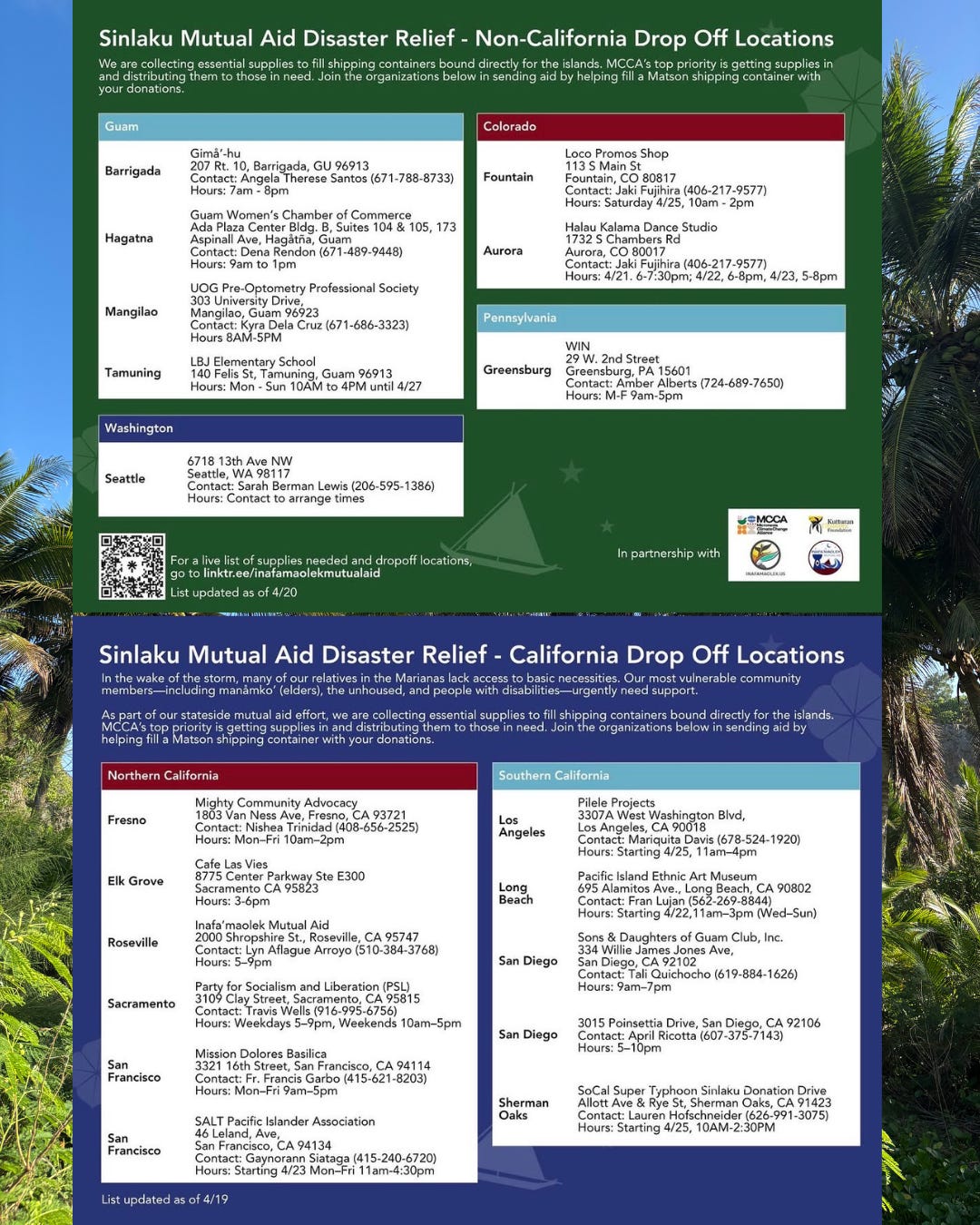
Donate to the following drop-off sites in the U.S. mainland for CNMI and Guam.
Thanks again for another report Rachel. I especially enjoyed learning more about the Metcalf program work. It made me think about something mentioned here about "equitable and fair." That strikes me as intriguing on the level of journalism. What are the coordinates of what is fair and what is equitable? In what ways or with what strategies can reporters both adhere to the fairness doctrine, yet pursue stories about equity? I think there is a productive tension here that perhaps deserves more attention and discussion, and which you have nicely opened up with today's piece.