


This article was produced by The Confluence and co-published by The Xylom, a nonprofit news outlet covering global health and environmental disparities. Subscribe to their newsletter here.
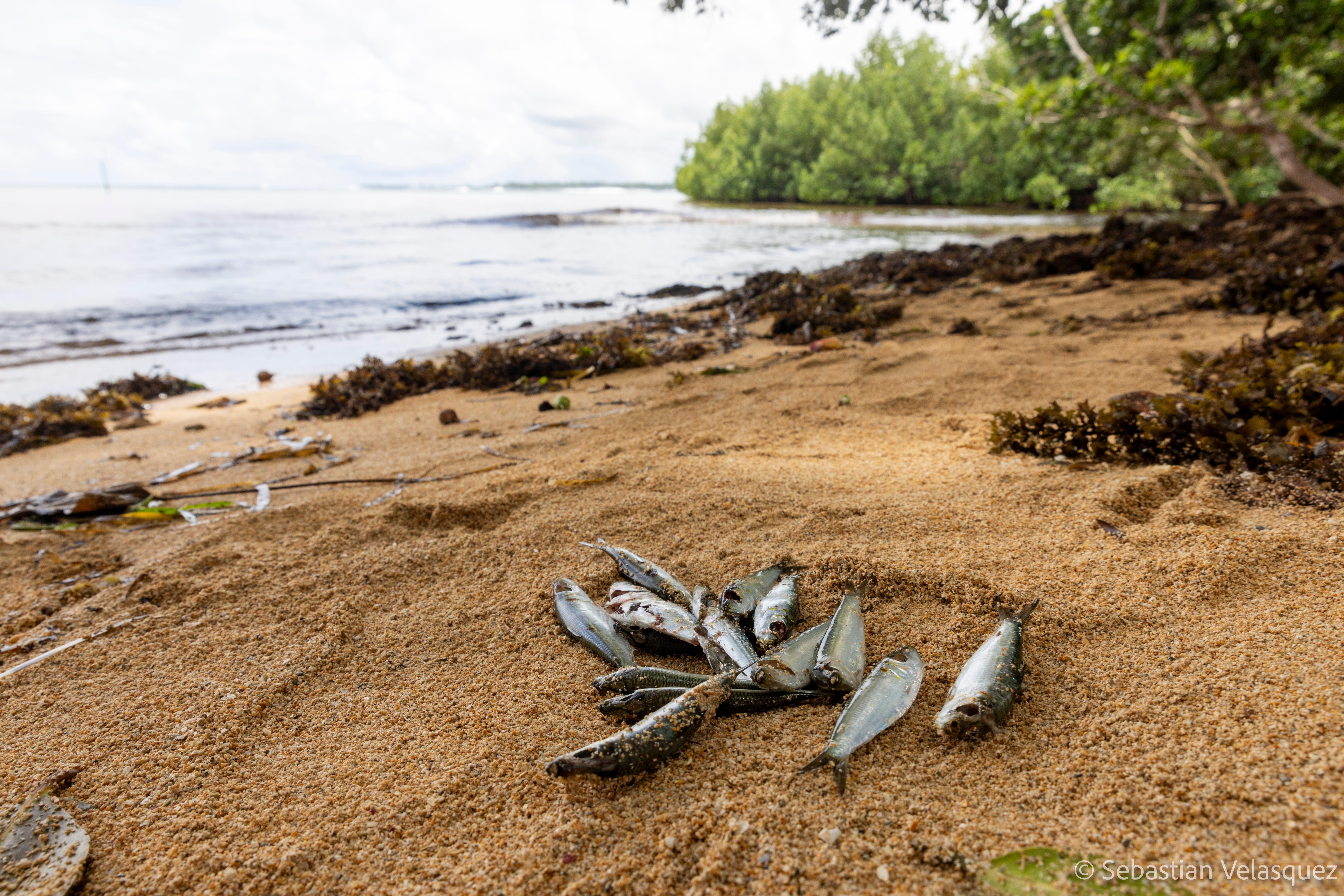
In the villages of Kafkaf and Manggai, in Papua New Guinea’s New Ireland Province, the morning ritual is no longer about the catch, but about the count. For months, the ocean has been washing its dead marine life ashore. Schools of fish are dying across a number of sites, while more than a thousand people have reported skin burns, respiratory illnesses, and gastrointestinal symptoms after being in contact with the ocean. For some, skin lesions are taking about a month to heal.
It is still unclear what’s causing the toxic event. Coastal communities first reported the contamination to the Papua New Guinea government last December, and although environment officials eventually collected water samples, promising a two-week turnaround, the results were never released.
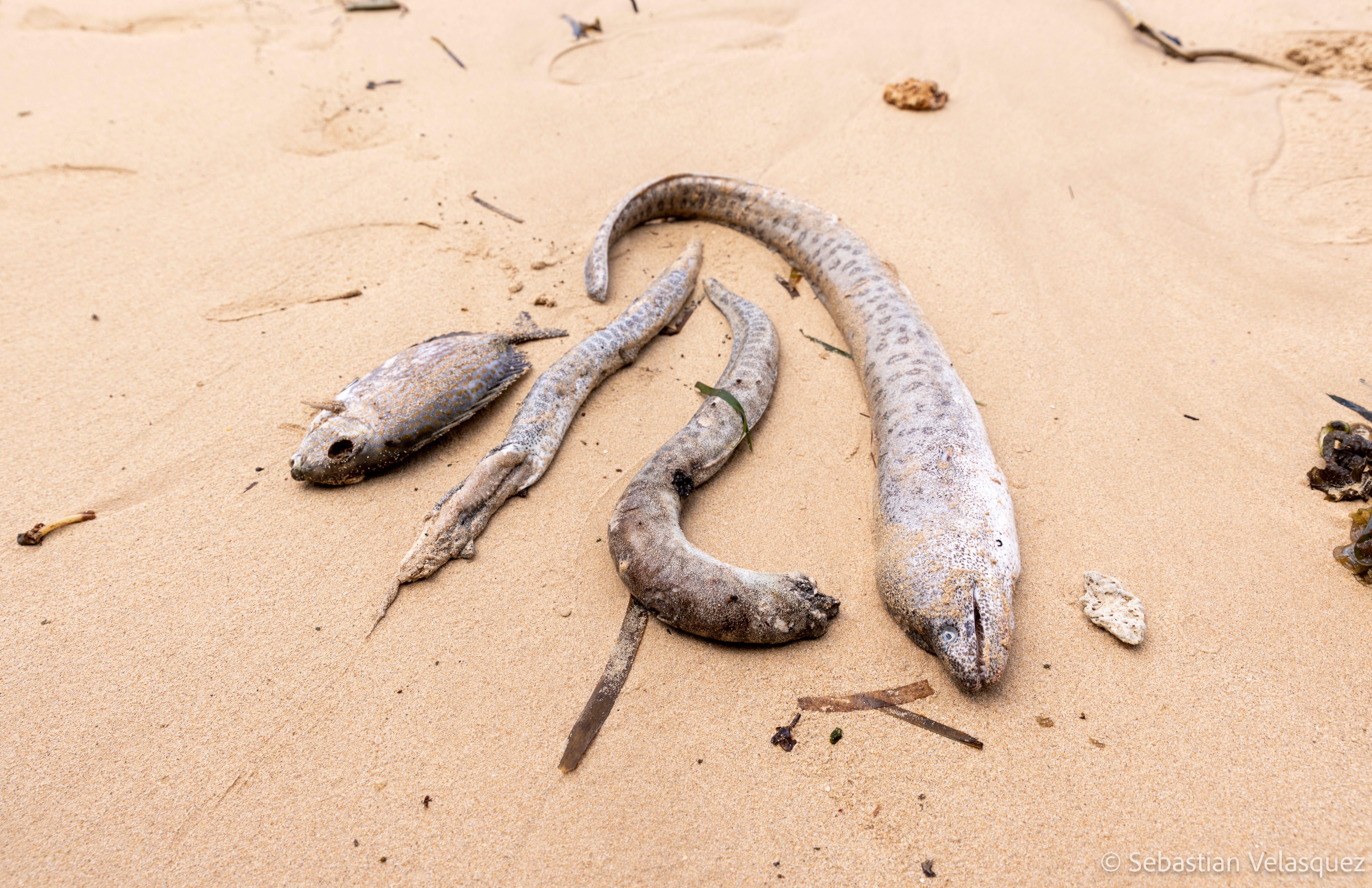
As months passed and pressure mounted, government silence forced local hands. John Aini, founder of the Indigenous-led marine conservation group Ailan Awareness, and local journalist Rebecca Marigu began mapping the disaster in real-time. In just five days, they documented over 3,400 dead marine organisms spanning 15 different species.
“It was quite shocking,” Marigu, who founded Siro Media, told The Confluence. “For us islanders, we’ve been people who have always depended on the ocean. The ocean is our life. It’s our source of protein, our source of income … our whole life revolves and is generated from the ocean.”
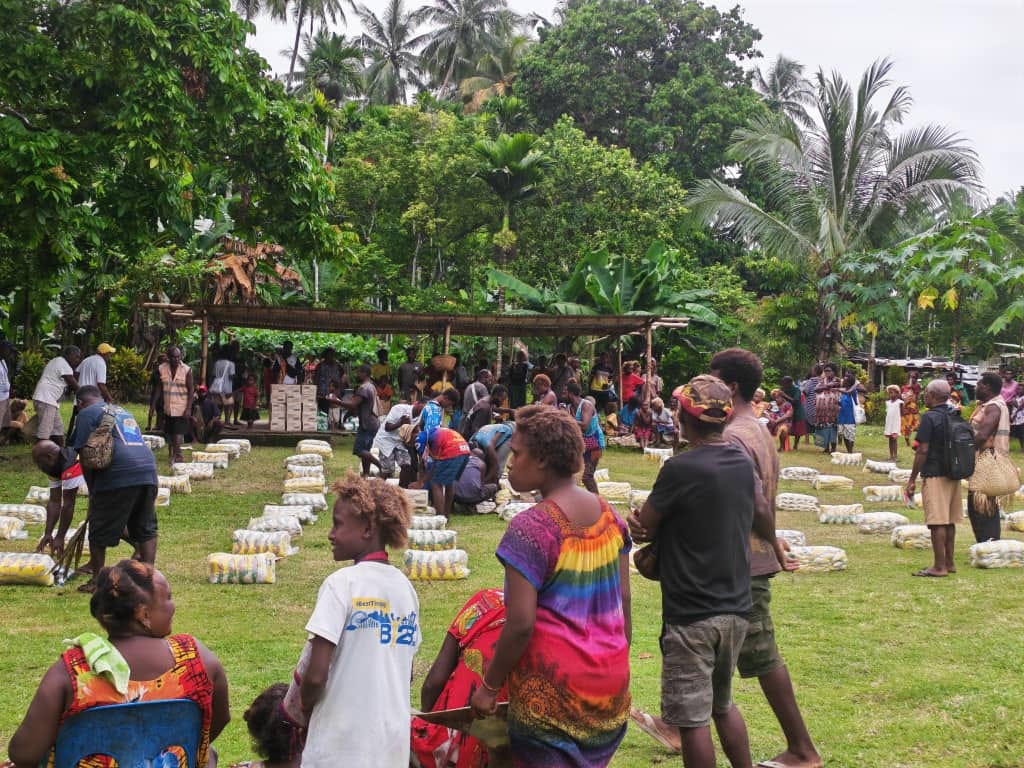
In response, an international campaign rapidly gained momentum, uniting scientists, journalists, and activists with the local community. This collective effort raised $11,000 in emergency relief, providing essential water tanks, medical supplies, and food, as well as sandbags to defend against the encroaching king tide surges.
It also put pressure on the government, which Marigu said “only decided to investigate when the world was watching.”
On March 17, it seemed like the campaign reached a feat when the Minister for Fisheries Jelta Wong addressed the issue on the floor of Papua New Guinea’s Parliament. “At this point in time it’s really hard for me to tell you what chemical it is because we’re looking at all options,” Wong said. “There’s a lot of activity along that coast there, they’re looking at different types of chemicals.”
Wong publicly committed to delivering laboratory investigation results by March 31, a deadline the government missed without issuing any statement.
As of April 7, communities are still waiting on results, while the crisis continues to spread. More dead fish, primarily blue-striped herring, are washing ashore. An unusual pungent, sulfurous odor hangs over the reef areas. This contamination has now reached local creeks, triggering water insecurity for nearby residents. Fishers who rely on the ocean for income are treading water. Researchers say the toxic event may represent a cultural tipping point.
“Now that [the government] thinks attention has moved on, they’ve gone quiet again,” Marigu said. “It hasn’t moved on.”
‘The ocean is our life’
Nestled between the Pacific Ocean and the Bismarck Sea, Papua New Guinea is home to vast, shimmering coral reefs that support more than 3,000 fish species. At its northeastern edge lies New Ireland, a mountainous island where the economy is driven by the land and sea. But here, the geography itself is working against the ocean. The island’s limestone foundation is dangerously permeable, allowing toxic chemicals to bypass natural buffers and seep straight into the coastal waters that feed its people.
New Ireland Province is home to several Indigenous communities, where fishing is not just an important industry but a fundamental pillar of their existence. For the roughly 77% of the population living along New Ireland’s coastline and surrounding islands, the ocean serves as both their primary supermarket and bank account.
This absolute reliance on marine resources guarantees that any disruption to the ocean’s health — whether from a changing climate or industrial activity — directly threatens the survival of New Ireland’s coastal communities, Marigu said.
Still, industrial extraction is everywhere. For instance, Lihir Island, roughly 75 miles east of affected communities, is home to one of the world’s largest gold mines. The island has a long history of environmental controversy around its deep sea waste disposal. A second gold mine on Simberi Island also went through a major change in ownership last December, the same month communities first reported contamination. Then there’s the palm oil plantations operating near some of the impacted communities on the east coast, raising concerns about agricultural runoff.
Bodhi Patil, ocean advocate and founder of the InnerLight Foundation, came to New Ireland in March to deploy a grant for a coral restoration initiative called the ENB Sea Keepers. But what was intended to be a three-day visit turned into over two weeks of calling attention to an escalating crisis. Using his strong social media platform, Patil helped launch an international campaign during his time there.
“This was totally unexpected; some people call it divine timing, some people call it a coincidence,” he told The Confluence. Patil felt the impacts himself, falling sick on his first day in the village. Later while paddling out in the ocean, he felt his legs burn immediately.
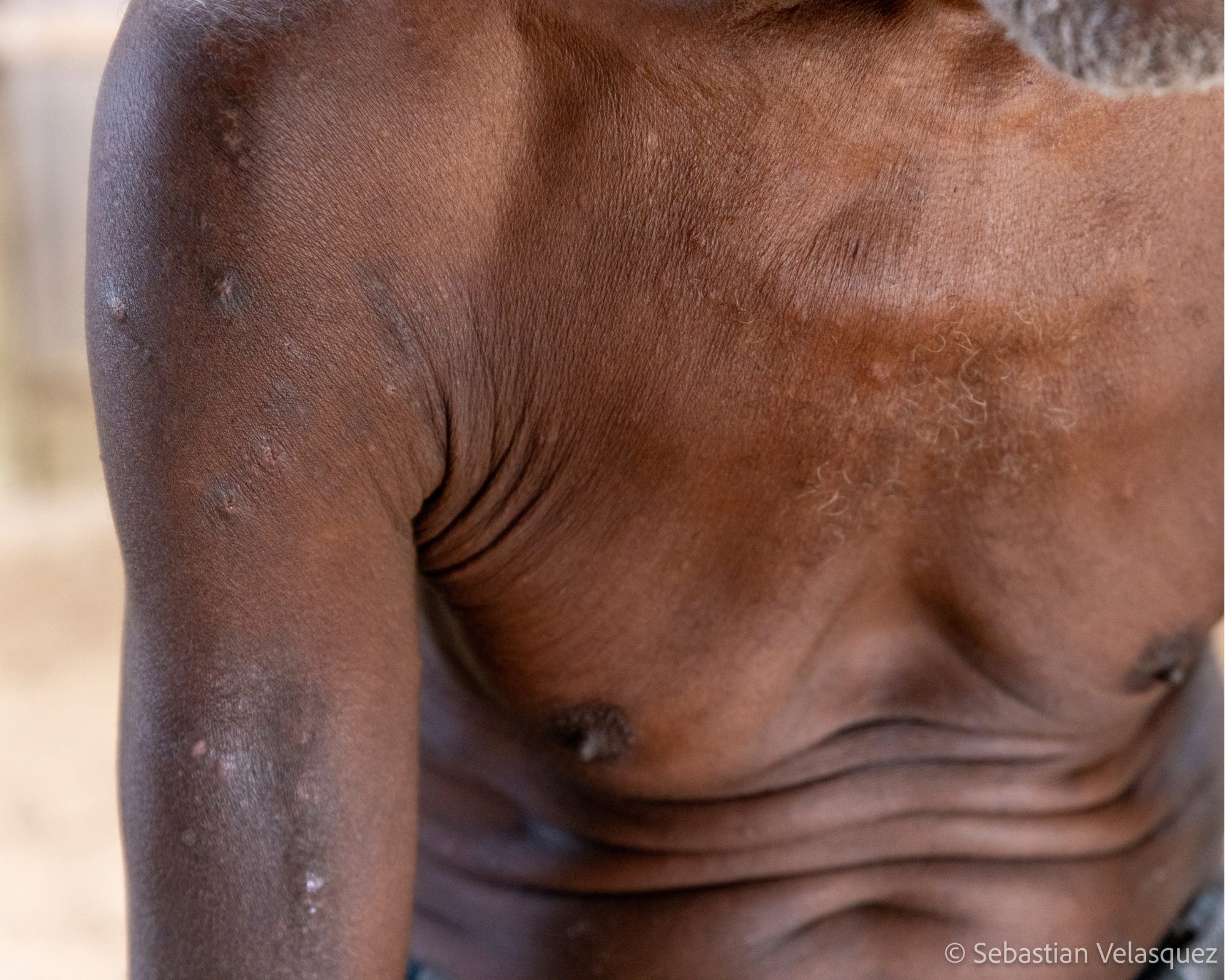
Scientists involved in the international response to the crisis on the ground have identified possible causes as the community waits for official results from the lab. Contamination from the mining industry and agricultural runoff may be the chief contributing factors, they say. Although experts did consider harmful algal bloom, they noted that the severity of skin burns and cross-species die-off pattern is not consistent with toxic algae exposure. Deep-sea mining was also ruled out as a source, since the mining is happening on the opposite coastline.
“These communities understand the value and importance of water, and whether that’s in scarcity or abundance, it’s essential to all life,” Patil said. “And in these communities, especially in New Ireland Province and the Indigenous villagers here, they understand that if they don’t have a healthy ocean, they don’t have a healthy livelihood or a healthy economy.”
A cultural tipping point
New Ireland’s marine contamination event is just as much a cultural crisis as it is an environmental one.
Jessica Vandenberg, an environmental social scientist at the University of Rhode Island, said this could be a “cultural tipping point,” a concept developed by Ocean Nexus to show how the slow violence of ocean pollution damages both peoples’ physical health and cultural identity. In the study, they argue that current ocean policies fail because they only track physical data, and ignore the deeper issue: how pollution destroys the critical, lived connection between people and the sea.
When industrial mining releases heavy metals into the water, for instance, the damage isn’t just the toxicity of the fish, but also the loss of the communities’ act of fishing. And if a species central to a community’s identity — like a tuna or shark — becomes too contaminated to eat, the entire social fabric from traditional knowledge to food sovereignty collapses.
Culturally significant food sources like local fish allow communities to avoid reliance on global markets and purchased imports, Vandenberg, lead author of the cultural tipping points study, told The Confluence. Losing access to these foods undermines cultural practices and livelihoods, she added.
In the case of New Ireland, the consequences appear more instantaneous. This sudden shock has made traditional fishing and ocean life feel unsafe, causing a rapid loss of trust in the sea. If this continues, research says people’s ways of living could shift dramatically.
“The people most affected by pollution are not the ones who are responsible for producing it,” said Vandenberg, noting that this new framework could “hold polluters accountable and call for increased regulations of pollutants.”
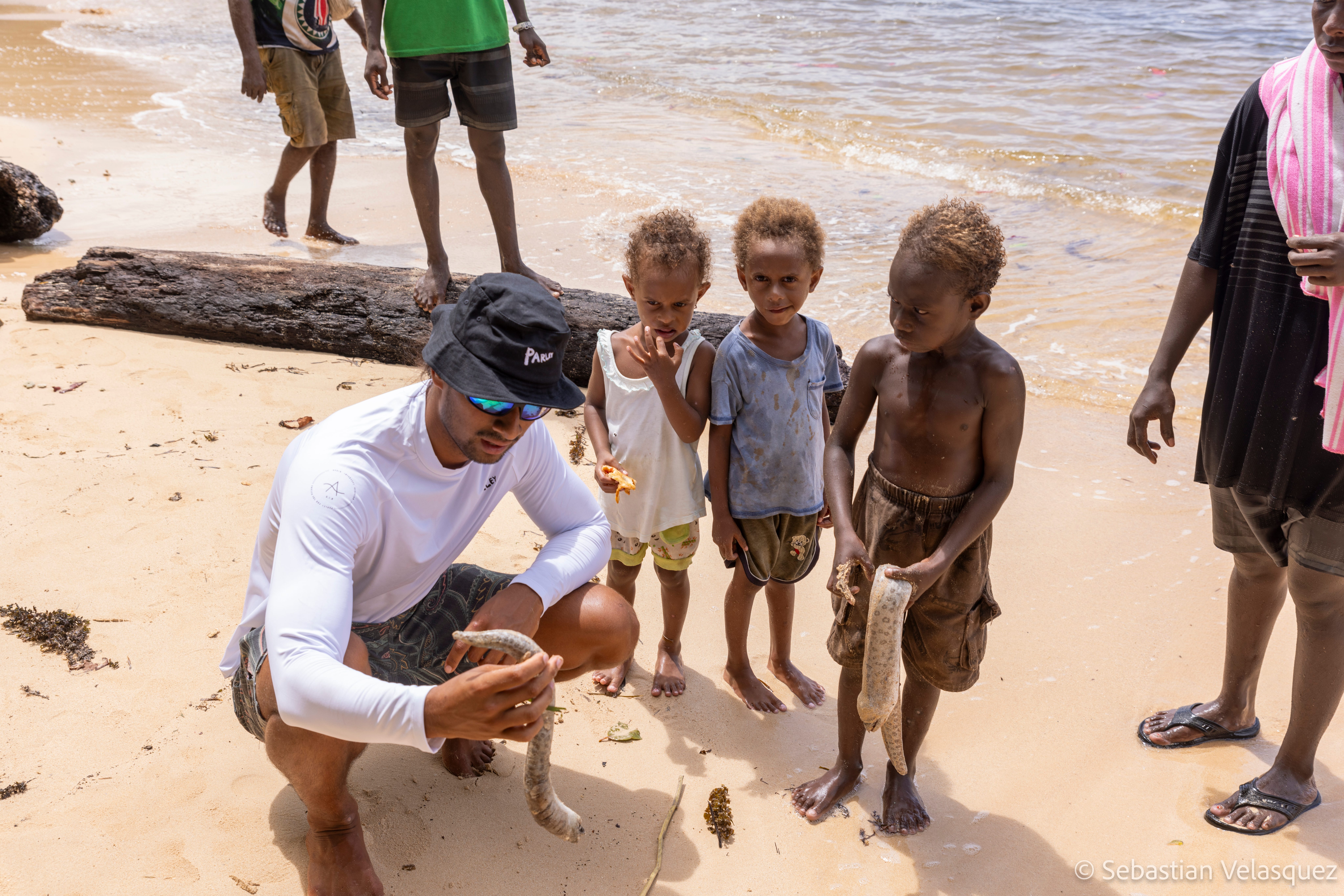
Already, Patil said he’s seeing children avoid swimming in the ocean, which for centuries has been an integral part of the local islanders’ upbringing. This becomes a tipping point when the contamination becomes so severe that a community is forced to abandon its ancestral relationship with the ocean, leading to a permanent loss of heritage that no amount of economic compensation can fix.
“The hardest part for me is watching the children, knowing that their normal daily lives are being affected and being restrained from having access to the ocean and the sea, which is part of growing up for me as a child,” Marigu said. “It’s something that no child should ever be put through.”
It is still unclear what is causing the marine contamination event due to a significant delay in lab results from the samples the government has taken. As of April, no tissue sampling of marine animals has been done due to lack of equipment on the ground. Locals are now exploring independent laboratory testing outside of the government.
“We are all still waiting for answers,” Marigu said. “I want policymakers to think about the future generation and have compassion and empathy and that at the end of the day, every decision we make either will make us or break us, and children are either going to suffer or they are going to thrive with every policymaking decision.”
How can you help?
“We need longer term solutions to solve these issues into the future and do more than just rapid response,” Patil said. “Human lives should be valued and people on the front lines of ocean injustices should be protected.”
Donate. Support the community directly by contributing through this GoFundMe campaign. The initial money raised will be used for food, water tanks, and medicine for the people affected with severe skin and health conditions.
Experts needed. Local groups are calling on researchers and technical experts with backgrounds in marine ecology, ecotoxicology, ocean pollution, spatial analysis, public health, and environmental data science to support the analysis of monitoring data collected. If this is you, fill out this form.
Government pressure. “Put pressure on responsible authorities in your home country and in Papua New Guinea to address issues that are within their jurisdiction,” Patil said.
“The amount of joy that these children have despite the pain they’re suffering is something we can all learn from,” Patil said. “In a time of world crisis and hatred and discrimination and war, love is the way forward, and the ocean is a bountiful place of love when it’s protected.”