


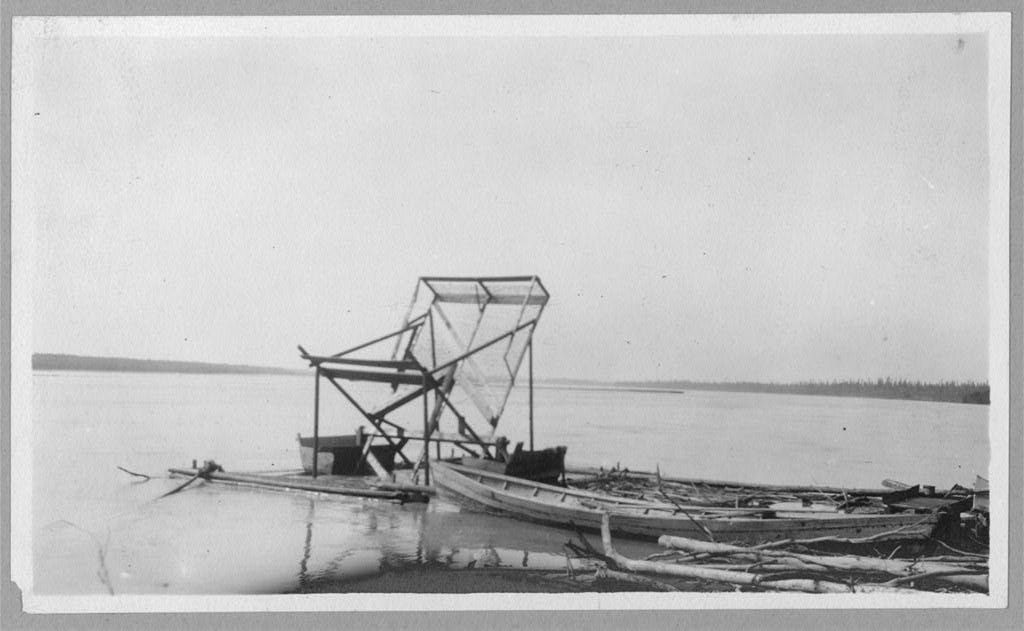
Growing up, Freddie Christiansen ran with a close-knit group of boys who dreamed of becoming skippers, owning and captaining their own boats. “We started out on little wooden boats that didn’t have engines,“ recalls Christiansen, an Alutiiq fisherman from the Kodiak Island village of Old Harbor. “We had to row and row to be able to commercial fish.”
For the Alutiiq people, harvesting fish was woven into the fabric of daily existence; Indigenous communities across Alaska had sustainably managed salmon runs for thousands of years. But by the mid-20th century, rapid industrial expansion — driven by non-native fleets, out-of-state cannery fish traps, and aggressive open-access exploitation — threatened to drive once-thriving salmon runs to near extinction.
To stem the decline, Alaska passed the landmark Limited Entry Act of 1973, capping commercial fisheries through permits that could be kept for life, passed down to family, or sold on the open market. But by treating ocean access as a commodity rather than an ancestral right, the law severed Indigenous stewardship from fishery governance. While many rural Alaska Native fishers initially received permits, economic downturns and personal hardships forced many to sell them.
Over the next five decades, thousands of permits drifted away from Alaska Native villages and into urban hubs or out-of-state hands. Christiansen considers himself “fortunate” to have secured a permit and become a skipper at 18, but his childhood friends were systematically priced out. By their mid-30s and 40s, Christiansen said more than half of the boys he grew up with had passed away, many following long struggles with substance abuse — a tragic decline he directly links to being shut out of the fishery and stripped of a livelihood, culture, and purpose.
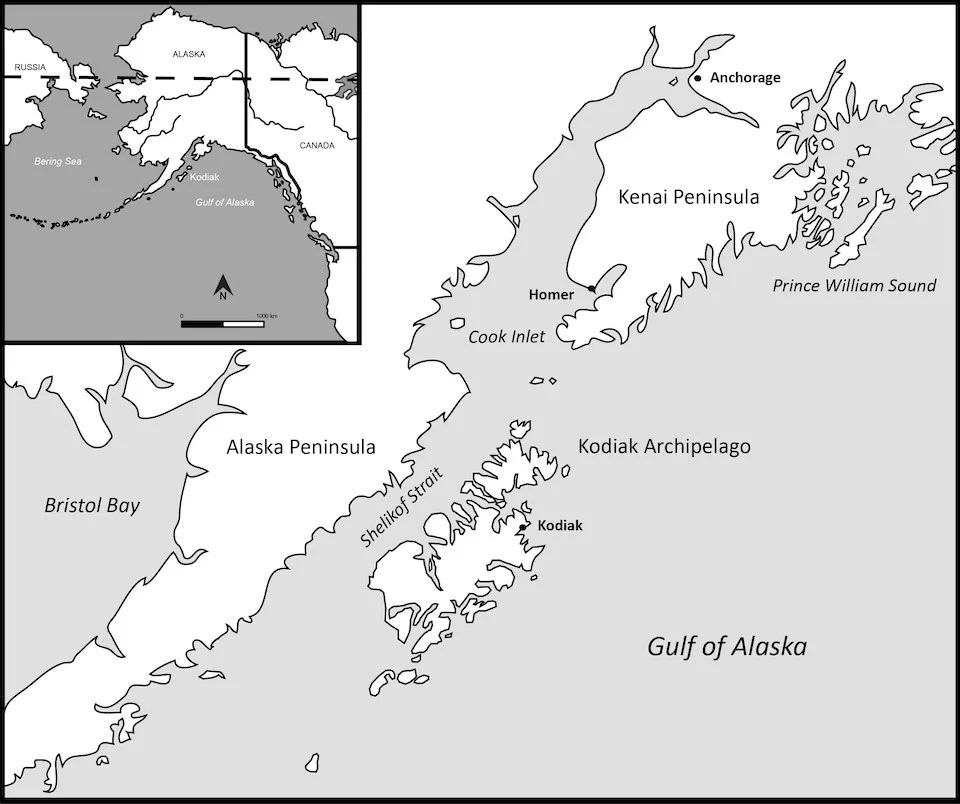
To him, it was a stark revelation of how fisheries also dictates a community’s survival. “I believe we’ve been disenfranchised; I believe we’ve been mistreated,” Christiansen said. “I believe in balance, and right now, we’re not part of that balance.”
Fish has become the central flashpoint in Alaska’s elections. As salmon runs collapse and operating costs skyrocket, voters are increasingly judging policies by whether they protect local working waterfronts or serve corporate interests.
That electoral pressure is felt all the way in Washington, where days before a midterm election that saw Democrats sweep key races nationwide, the Trump administration unveiled the “America First Seafood Strategy.” More than a year after President Donald Trump signed an executive order in April 2025 to restore America’s seafood industry, the new 33-page plan aims to bolster national food security by slashing regulatory hurdles, modernizing processing infrastructure, and shielding US fishers from foreign competition — anchored by promises for a voluntary “US Caught Seafood” label and more than $5 billion in loans to support US fish processors and fishermen.
But beyond these promises, the strategy offers no new federal money, no fresh grant programs for struggling fishers, and no direct appropriations for processing facilities. Instead, the Trump administration is betting it can rebuild a shrinking domestic fleet using existing administrative levers by streamlining permits, tightening import inspections, expanding federal purchasing, and recycling current loan programs. Whether these bureaucratic tools can actually shift the market share away from cheap foreign imports and back to US docks remains a question mark.
According to data from NOAA fisheries, US commercial fishermen land approximately 7.7 billion pounds of seafood annually, while the country imports nearly 6.4 billion pounds of edible seafood products and exports roughly 2.3 billion pounds. This massive trade deficit highlights a major structural opportunity for domestic market expansion, but experts say it must be done in an efficient and equitable way.
Although the report briefly nods to small-scale fishers, its vague promises offer little protection against big-money interests, experts note. By favoring heavily capitalized operations, the policy ultimately threatens to price out independent operators while once again undermining traditional Indigenous food systems in regions like Alaska.
“I like that it mentions coastal communities, small-scale fisheries, and food security,” said Courtney Carothers, an anthropologist and professor at the College of Fisheries and Ocean Sciences at the University of Alaska, Fairbanks. “But we know the large scale industrial fleets are so subsidized and their profits are always protected, and it’s the small boat guys that are often just out of luck.”
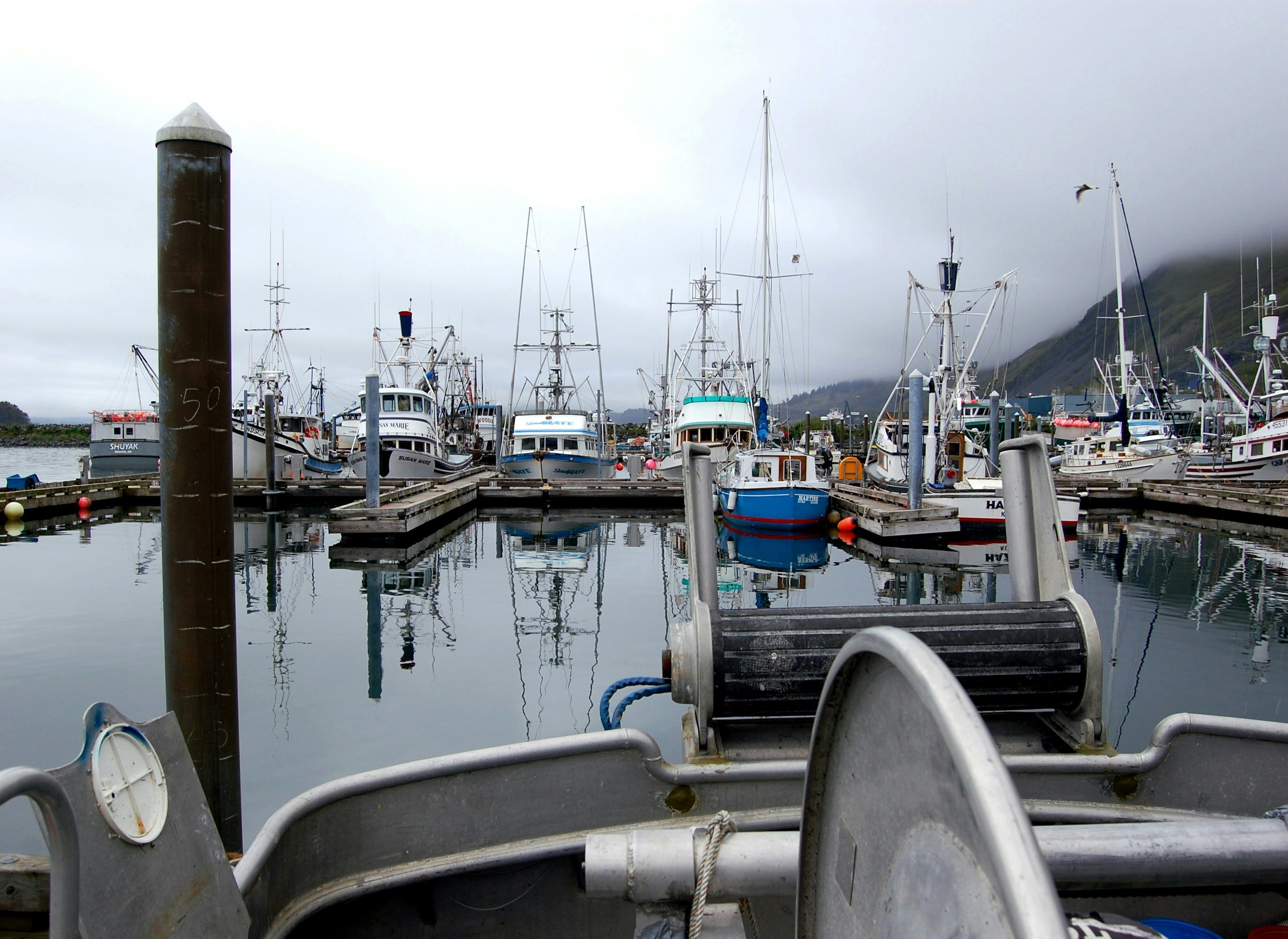
Carothers’ skepticism highlights what’s missing within the initiative: despite an emphasis on coastal communities, the strategy seems to treat the seafood sector primarily as an industrial supply chain rather than a community-based food system. It also risks reinforcing the exact systemic disadvantage small-boat fishermen like Christiansen face, treating the entire domestic fleet as a monolith while the economic benefits skew heavily toward industrial trawlers.
“If there could be direct acknowledgement that a lot of this financial investment goes directly into infrastructure that communities need to have community-supported fisheries, rather than going to build enormous new industrial vessels that aren’t needed and further exacerbate the problem,” Carothers said, “that would be ideal.”
Nowhere is this divide clearer than in the implementation of catch share systems, in which the government allocates a specific, percentage-based share of the total catch directly to individual fishermen, vessels, or communities based on historical catch records. Trump’s strategy focusing on modernization, vessel upgrading and private capital expansion favors those who already control significant assets. In a catch-share environment, large industrial fleets can leverage their quota holdings as collateral to secure loans, while small-scale fishers holding small or leased quota shares struggle to secure that same capital.
“Catch shares are a prototypical neoliberal project,” said Wilf Swartz, associate professor of the marine affairs program at Dalhousie University and deputy director of Ocean Nexus. “Yes, catch shares change incentives for fishers but it also creates an investor class for quota owners who claim a large share of benefits generated in the fisheries via quota lease fees,” while creating a system that “legally pushes or buys out Indigenous and coastal communities’ access to fisheries.”
Trump’s initiative frames food insecurity through this same corporate lens, treating it as a matter of national security and economic independence rather than local equity. It fails to address that the system is set up in a way that exacerbates food insecurity in communities, and that as warming waters and ocean acidification decimate wild stocks, subsidizing large industrial fleets over local small-boat harvesters only accelerates ecosystem collapse, which then leaves frontline coastal communities least equipped to feed themselves.
Instead, the strategy offers a consumer-side fix: voluntary “US Caught Seafood” labeling and national marketing campaigns to eat more domestic fish. But a domestic origin stamp does nothing to alter who holds the rights to harvest that fish, Swartz said.
“The biggest issue is that the US consumers’ don’t care where their seafood comes from and are happy with cheaper imports,” Swartz said. “Also, they have very narrow preferences [in fish] so even if the US landings go up, it is unlikely to shift consumers away from imports.”
But the challenge isn’t just on the consumer side; it’s also taking a toll on the future of fishing communities themselves. Christiansen said that many Alaska Natives are becoming less interested in the way of life that has sustained their people for generations.
“There’s no reinvestment in that next generation of small-scale fishers,” Carothers said, “and I feel like if there’s money to be had in this initiative, investing a lot of that in this younger generation re-entry into small-scale fisheries in Alaska would be a super important part of this.”
For Christiansen, solution starts with putting Indigenous fishers at the decision-making table and ensuring policies are guided by the communities who have stewarded these waters for centuries.
“We’re not just saying, ‘Hey, we want access to our resource,’ but we also want to be part of protecting the resource,” he said. “At the end of the day, I just love being out in the ocean – whether we make money or don’t make money, because it’s who we are.
That’s where I’m at home. The ocean.”
