


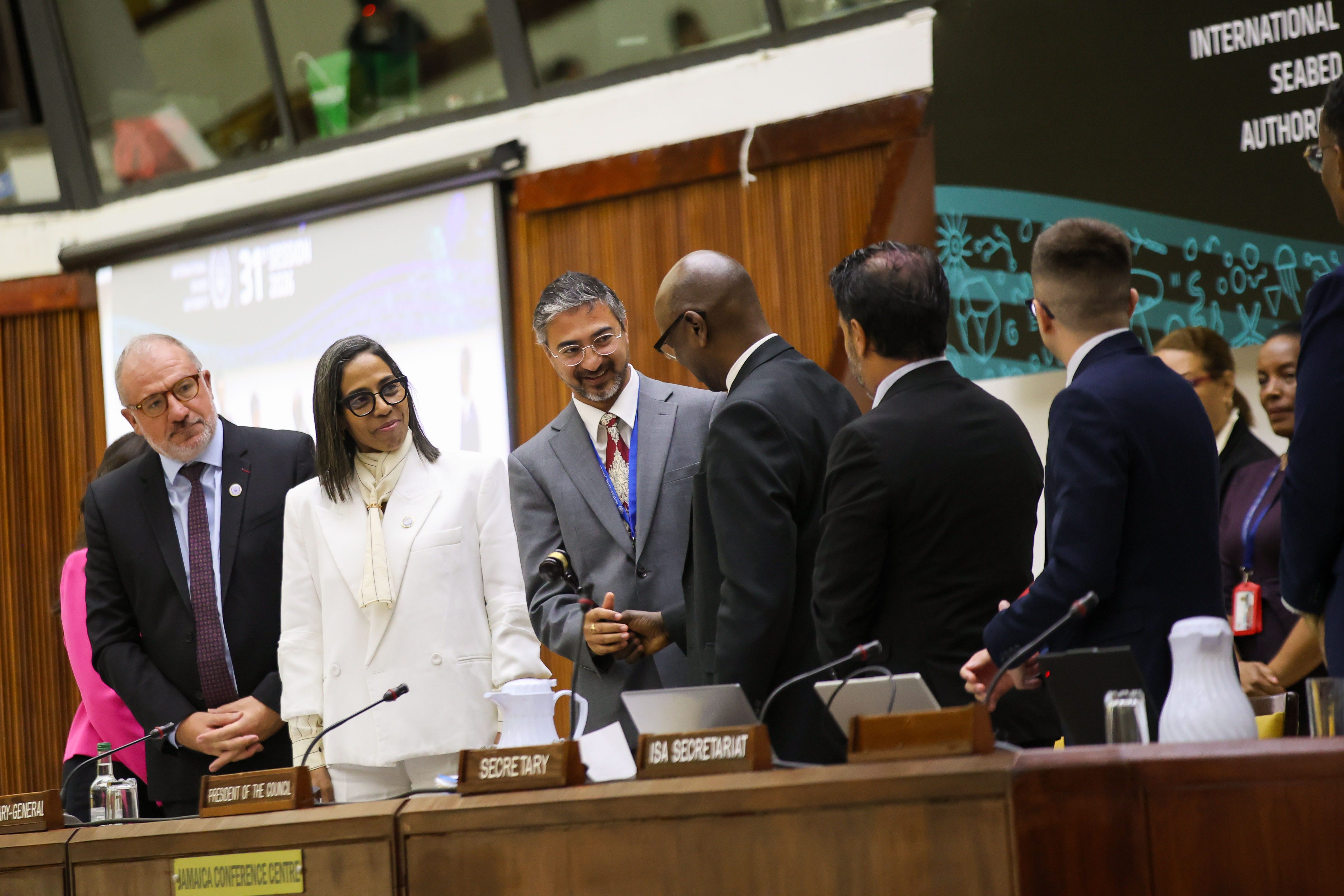
After two weeks of negotiations in Kingston, Jamaica, delegates and environmental advocates this week concluded a pivotal meeting on the future of deep-sea mining with no mining approved.
The talks are hosted by the International Seabed Authority, the UN body responsible for regulating all resource and mining-related activities happening within international waters. Their mission is guided by the UN Convention on the Law of the Sea (UNCLOS), which defines the deep seabed as the “common heritage of humankind.” This means these areas belong to no single nation and must be managed for the collective benefit of everyone.
The ISA and member states are trying to finalize what’s called the “mining code,” which is essentially exploitation regulations that the ISA is actively negotiating on to govern commercial-scale deep-sea mining. While the ISA has issued dozens of contracts for exploration in the international seabed — with large areas covered by license-holders from China, the U.K., Belgium, and Japan — the ISA Council has stated that no mining will occur without final regulations.
Unlike her predecessor who wanted industrial-scale deep-sea mining to happen quickly, ISA Secretary-General Leticia Carvalho has said she wants to prioritize a mining code that is “science-based, transparent, and neutral.”
“I would say my hope is to bring these negotiations to the point where adoption (of a mining code) becomes achievable,” Carvalho told reporters during a press briefing on Thursday, noting that it is necessary to adopt a “mining code with robust safeguards.”
However, many delegates and environmental advocates in the room warn that a mining code is far from complete. They argue that regulations cannot be safely adopted without addressing missing scientific data and a broader ocean governance framework that centers equity, environmental protections, and economic commissions.
“The deep sea is the largest and least understood ecosystem on Earth,” said Sofia Tsenikli, director of the Deep Sea Conservation Coalition’s deep-sea mining moratorium campaign. “We simply do not have the science, baseline data, or ecological understanding of the deep sea and the benefits it provides to confidently build and finalize a regulatory system for industrial extraction.”
US vs the Marianas Islands
The growing scientific concern against seabed mining, however, has not slowed the geopolitical momentum led by the United States, which continues to prioritize economic security over rigorous scientific evidence and equitable benefit-sharing less wealthy nations are seeking out.
Although the US is not a member of the ISA and has not ratified UNCLOS — often referred to as the “constitution of the oceans” — it still plays an observer role during the meetings. And as small-island states called for a moratorium on deep-sea mining at the international stage, back in Washington, the US had something else in mind.
On Wednesday, the Trump administration’s Bureau of Ocean Energy Management announced plans to nearly double the size of the seafloor area it is eyeing around the Marianas archipelago. The leasing area of 69.1 million acres — an area bigger than New Zealand — would bring mineral extraction closer to the U.S. territories of Guam and the Northern Mariana Islands.
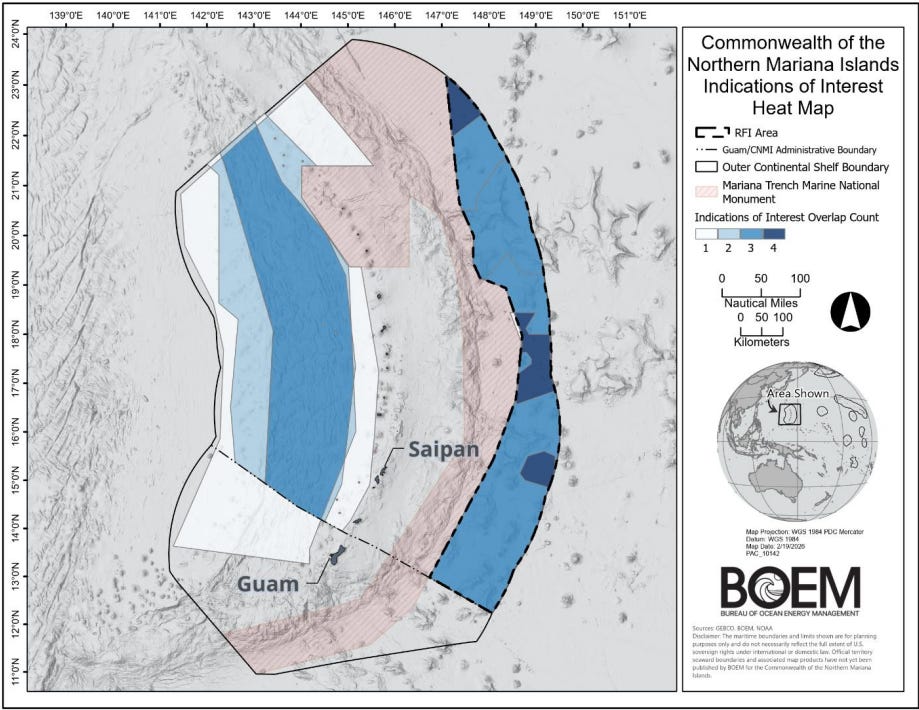
The announcement comes two months after the Trump administration received more than 65,000 comments opposing deep-sea mining, sending anger and frustration among many local community members.
Angelo Villagomez, senior fellow for the Center for American Progress, said the decision “ignores the overwhelming concerns voiced by the people and local governments” of the American territories of Guam and Northern Marianas.
“It pushes forward an industrial experiment in one of the most biodiverse and culturally significant ocean regions on Earth,” Villagomez, who is CHamoru from the Marianas island of Saipan. “This decision ignores baseline science and was made without meaningful consultation or any guarantee that the Indigenous peoples most affected would even be protected, let alone see benefits.”
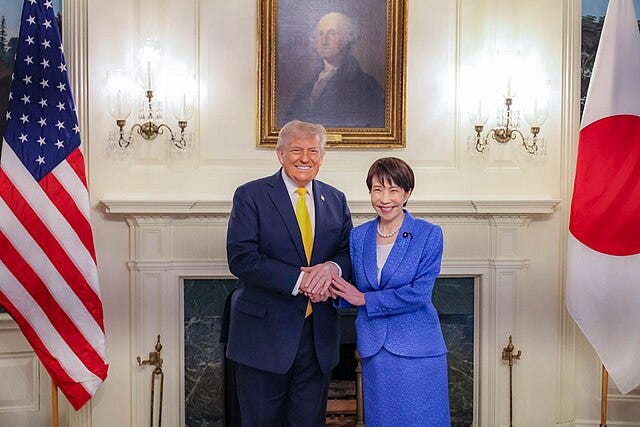

Moreover, against the backdrop of the conclusion of ISA meetings on Thursday, Japanese Prime Minister Sanae Takaichi — whose nation recently mined rare earth elements from the deep seas near Minamitorishima Island — paid Trump a visit to the White House.
Although the meeting was largely to discuss the war on Iran, both the U.S. and Japanese leaders unveiled a joint action plan to advance critical minerals and rare earths development without China playing a key part in the supply chain. The deal comes after both countries signed an agreement on rare earths in October 2025 to counter China’s dominance on mineral exports.
More work to be done
These actions from the Trump administration signal a growing issue with regards to unilateral mining, critics warn, which has been a major talking point during the ISA meetings over the last two weeks.
The US may not have obligations under international law as a non-member state, but Carvalho warns that member states, like Japan, do have obligations to abide by international law throughout the supply chain.
“Engaging with actions to mine the deep sea outside of the ISA regime could open doors to actions deemed as breaches of international law,” the Secretary-General said.
More than 40 countries, alongside major businesses, Indigenous leaders, scientists, and fishing industry associations, now support some form of a pause or moratorium on deep-sea mining.
The ISA and member states are set to head back to Jamaica for the next round of meetings in July. For now, Carvalho said, “We keep working, taking stock, identifying gaps, mapping where the states agree and where they disagree, and continue to negotiate until consensus can be achieved.”

On my reading list
Butterflies crossing oceans, moths navigating by the stars: unravelling the mysteries of insect migrations, The Guardian
‘We Live in One Ocean’: Native Hawaiian Activist Calls for Inclusion in Deep-Sea Mining Decisions, InsideClimate News
The Weather Is Getting Wilder, and Some See a Dire Signal in the Data, The New York Times
Thanks again for an interesting piece! It was intriguing to see in Japan how so many different organizations and states are converging around this topic.