


Welcome to The Confluence, where you’ll find ocean stories that connect science and social justice for the people.
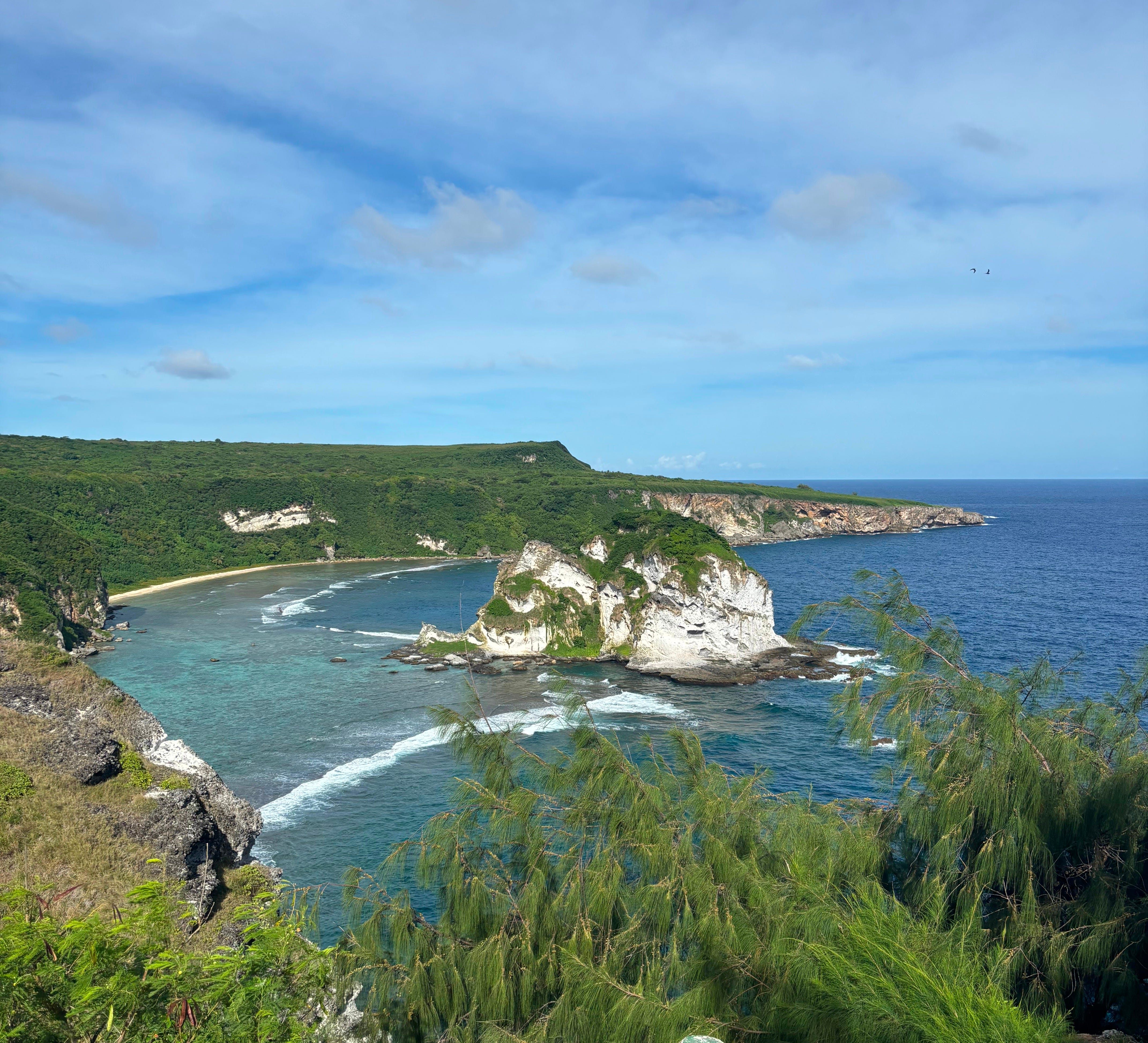
I’m Rachel Ramirez, an independent journalist based in New York City, formerly the climate writer at CNN, where I wrote about climate science, energy, extreme weather, climate solutions and environmental justice. Before that, I’ve written for Vox, Grist, The Guardian, HuffPost, Wired, and so on. I’m currently writing to you from my home island of Saipan in the Commonwealth of the Northern Mariana Islands, a U.S. territory just north of Guam. I haven’t been back home since before the COVID-19 pandemic, so it’s nice to be able to breathe in the salty ocean air while writing the very first issue of this newsletter.

Every second breath you take is produced by the ocean. (Well, it comes from tiny floating species called phytoplankton.) If the ocean didn’t absorb the vast majority of planet-warming pollution we’re pumping into the atmosphere, the average surface temperature on land would be a blistering, oven-like heat that could harm each and everyone of us. And if you’re anything like me, I find being near the ocean to be my happy place.
Here at The Confluence, I intend to go beyond science and underscore people’s relationship with the sea, specifically those who have been historically marginalized. In nature, a confluence is the powerful point where two distinct bodies of water merge into one. This newsletter is named for the vital, turbulent intersection where the rigor of ocean science meets the heartbeat of social justice. In most news stories of the ocean, the “what” of it all—the data, the tides, the chemistry—tends to be severed from the “who,” specifically the coastal communities, fishermen, migrant workers, and Indigenous peoples.
We created The Confluence to bridge that divide. We believe that science without justice is exclusionary, producing data that often neglects the human cost of a changing planet. Vice versa, justice without science lacks the foundational truth needed to build lasting solutions for our planet’s waters. Like the ocean, the stories of humans are constantly shifting. We will track the flow of policy, the currents of climate change, and the rising tides of grassroots movements. By linking researchers with activists and fishers with policymakers, we create a current too strong to ignore.
In my years covering the climate crisis within the rigid machinery of corporate media, reporting on the underlying inequities that plague historically marginalized communities was never a priority. We reported on the atmospheric shifts in climate while staying mostly silent on the historic injustices that leave specific communities more vulnerable to the wreckage. Too often, the practice is to parachute into a devastated community, find someone with a powerful anecdote due to deadlines, only to never check back in on that community again until the storm comes back.
In these major networks, the “big story” is often measured by scope and scale—the height of the surge, the category of the storm, another political fallout in D.C., and exclusives—leaving little room for the true human heartbeat of the crisis. With The Confluence, I get to trade the frantic pace of the 24-hour news cycle for the meaningful depth these stories deserve. I’m no longer just reporting on ecological changes; I’m finally able to focus on the people living through it.
The Confluence is supported by Ocean Nexus, an ocean research institute that focuses on establishing social equity at the center of ocean governance. The institute has a network of researchers around the world from South Africa to Panama to Australia, who study the world’s oceans while highlighting systemic inequities.
In this newsletter, I will be featuring the work of scientists and researchers, master navigators and seafarers, marine conservationists, fishermen and so much more. I also hope to hear from you, our reader, throughout this journey.
That said, please don’t forget to subscribe to this newsletter to receive the latest issues in your inbox and follow us on Instagram (at)theconfluence(dot)news.
