


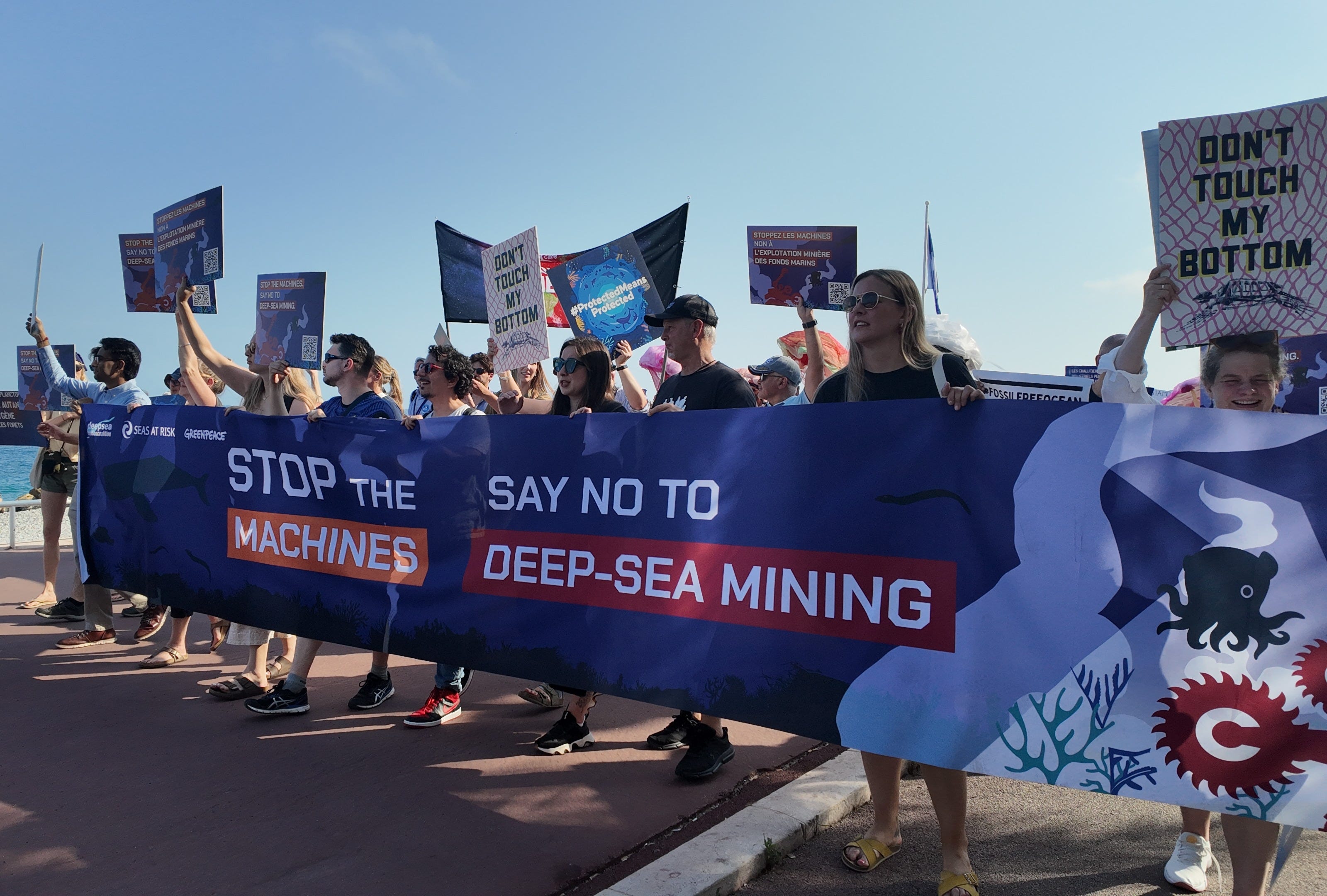
Two weeks of negotiations at the International Seabed Authority in Kingston, Jamaica, concluded with no new rules for deep-sea mining. Instead, the talks ended with an even stronger case for a moratorium.
The council meeting — hosted by the International Seabed Authority (ISA), the UN body responsible for regulating all resource and mining-related activities happening within international waters — highlighted significant gaps in the science and data needed to create reliable environmental standards for seabed mining.
ISA’s mission is guided by the UN Convention of the Law of the Sea (UNCLOS), which defines the deep seabed as the “common heritage of humankind.” This means these areas of the high seas belong to no single nation and must be managed for the collective benefit of everyone.
Although countries and mining companies are already exploring the ocean floor to map out where critical minerals are most abundant, no commercial mining is currently happening. That’s because the ISA and member states are trying to finalize what’s called the “mining code,” which is essentially exploitation regulations that the ISA is actively negotiating on to govern commercial-scale deep-sea mining. The regulatory framework must include key standards and guidelines, environmental thresholds, benefit-sharing regulations, and other governance measures.
While the ISA has already issued dozens of contracts for exploration in the high seas — with large areas covered by license-holders from China, the U.K., and Japan — the ISA Council has stated that no mining will occur without final regulations.
Environmental advocates say that a mining code is far from complete, underscoring the need to fill in scientific and ecological data gaps. Over 40 countries and multiple legal and environmental observers have now pushed for a moratorium, while mining proponents push to accelerate commercial guidelines.
“The science is not there,” Sofia Tsenikli, global campaign director of the Deep Sea Conservation Coalition, said in a statement. “Unlawful mining attempts continue unchallenged by states and the International Seabed Authority. None of these point toward deep-sea mining. It points towards precaution. It points toward a moratorium.”
Another sticking point during the meeting were tensions regarding unilateral moves outside of ISA authority, which further fragmented policy consensus. Leading into the meeting, the ISA was conducting an internal compliance inquiry into whether certain mining contractors were attempting to bypass international authority or breaching UNCLOS rules.
The investigation is linked to efforts by The Metals Company, the leading private developer aggressively pushing to start commercial seabed mining, to seek deep-sea mining pathways under U.S. domestic law, led by the Trump administration, rather than wait for an ISA consensus.
The ISA specified Nauru Ocean Resources Inc. (NORI), a subsidiary of The Metals Company, during its compliance inquiry. NORI held a 15-year seabed exploration contract that was set to expire on July 22, 2026, right in the middle of the two-week ISA negotiations. To keep its rights to explore a massive swath of the Pacific seafloor, NORI needed the ISA to approve a five-year extension.
But because of the investigation, NORI took the ISA to the International Tribunal for the Law of the Sea (ITLOS) in May, in an attempt to freeze the investigation so it wouldn’t jeopardize their contract extension. However, just days before the ISA session, tribunal orders paved the way for the ISA’s internal probe to continue, putting a setback to NORI’s legal attempt to block the inquiry.
But despite the active compliance investigation and tribunal drama, the ISA Council still voted to extend NORI’s exploration contract during the meeting, with member states making it explicitly clear on the record that granting the extension was “not a sign of approval” for NORI’s conduct, nor is the company cleared of any wrongdoing. The internal investigation remains open.
The NORI saga loomed over the entire two-week negotiations, deepening the divide between the delegates. Environmental groups argue that extending a contract for a mining company under active investigation, especially given its connection to a firm exploring unilateral mining options with the Trump administration, showed the ISA is struggling to enforce its own boundaries.
“The decisions of this week show the [ISA] once again hindered by its outdated process to move swiftly on companies breaking international law,” said Emma Wilson, policy advisor with DSCC. “By delaying action on unlawful mining, the ISA is undermining confidence in its ability to regulate the industry.”
“If it cannot enforce the rules, it cannot manage exploitation,” she added.